Master the Art of Dog Training: Proven Strategies for a Mannerly Dog Friend
Dog training is a nuanced procedure that calls for an understanding of canine habits. Reliable communication is essential for developing count on and establishing limits. Lots of owners forget the relevance of socialization and standard commands, which lay the structure for a well-behaved dog. Positive support plays a crucial duty in this journey. Challenges typically occur. Exploring proven approaches can result in a much deeper link between owner and dog. What might those techniques involve?
Recognizing Pooch Habits
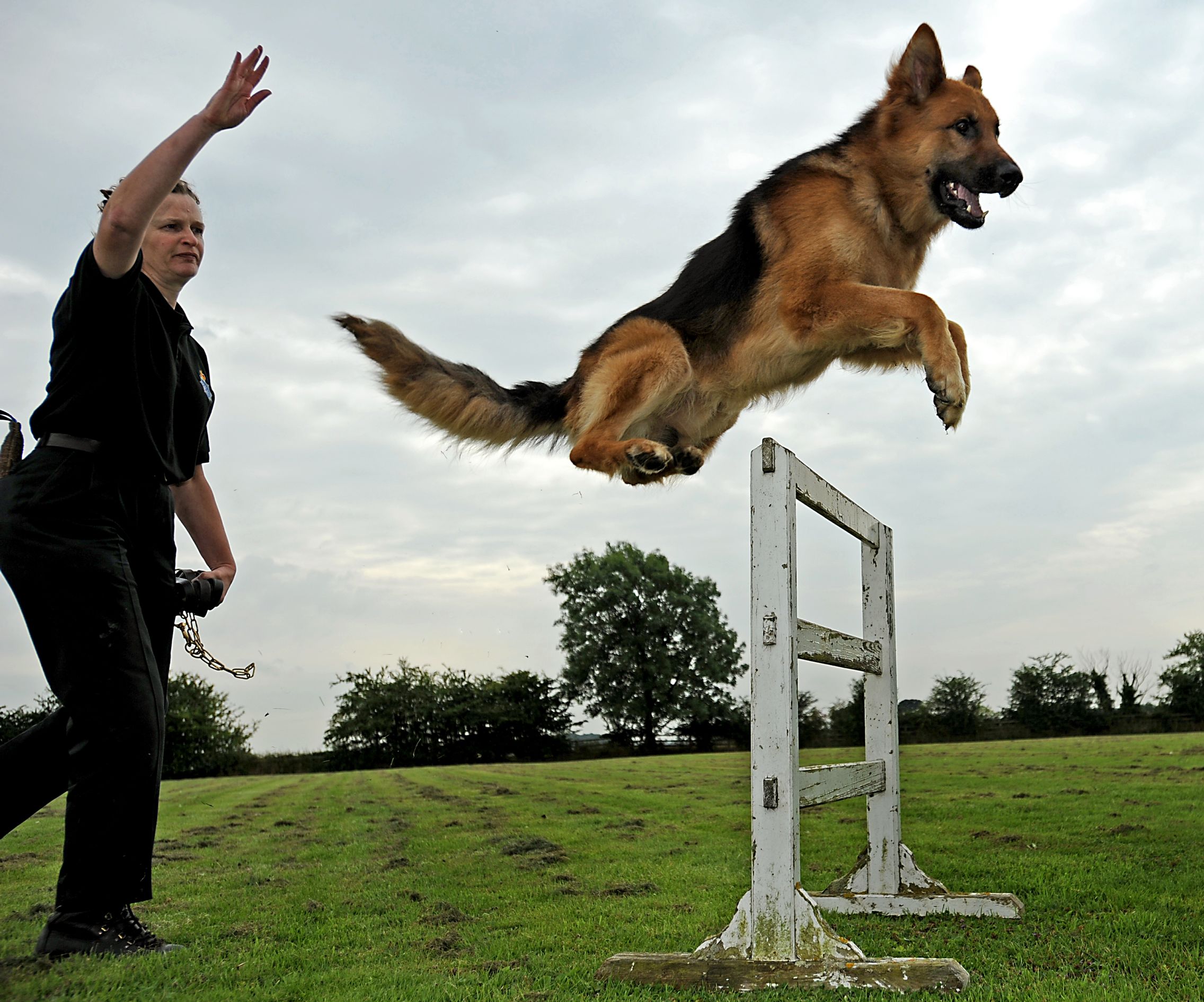
Comprehending canine habits is vital for effective dog training (Freeport Florida Dog Trainer). Canines connect through body language, articulations, and numerous actions, making it crucial for fitness instructors to translate these signals accurately. A wagging tail may suggest excitement, while a reduced head can symbolize entry or anxiety. Acknowledging these signs aids fitness instructors address issues and promote a positive discovering environment. Furthermore, recognizing the dog's instincts and all-natural propensities, such as their pack mentality, enhances the training process. Dogs flourish on regular and uniformity, so developing clear boundaries and assumptions is essential. By understanding these behavioral traits, instructors can develop customized approaches that resonate with the private dog's needs, inevitably causing a much more harmonious partnership between the dog and its owner
The Value of Socialization
Socialization offers as a cornerstone of reliable dog training, affecting a pet dog's actions and flexibility in numerous environments. Through exposure to different people, pets, and settings, pets learn to establish and browse social interactions self-confidence. This process minimizes the likelihood of fear-based responses, hostility, and stress and anxiety, promoting a well-adjusted pet dog. Early socialization, ideally during the important developing duration, is important for shaping a canine's personality and feedbacks to new experiences. Involving in positive experiences aids pets link strange scenarios with comfort and safety, promoting tranquil actions. Additionally, well-socialized pet dogs are commonly much more enjoyable buddies, as they are more probable to respond favorably in public areas. Inevitably, appropriate socialization lays the structure for a pleased, well-behaved canine companion.
Standard Commands Every Dog Ought To Know
A well-socialized dog advantages substantially from grasping fundamental commands, which are basic to effective communication between pet and owner. Crucial commands include "sit," "stay," "come," "down," and "leave it." Each command serves a particular purpose, aiding in safety and security and control. For instance, "rest" can avoid getting on guests, while "stay" keeps a canine in position, guaranteeing they do not stray right into danger. The command "come" is vital for recall, allowing owners to call their dog back securely. "Down" urges calmness, and "leave it" protects against undesirable behaviors, such as scavenging. Regular practice of these commands promotes a strong bond and good understanding, eventually leading to a mannerly canine friend that boosts the overall pet-owner partnership.
Positive Reinforcement Techniques
Positive support techniques play an important duty in efficient dog training. By making use of incentives and deals with, fitness instructors can motivate preferred habits, while remote control training provides a specific technique for noting those actions. Uniformity in using these techniques guarantees that dogs find out and preserve commands much more efficiently.

Benefits and Deals with
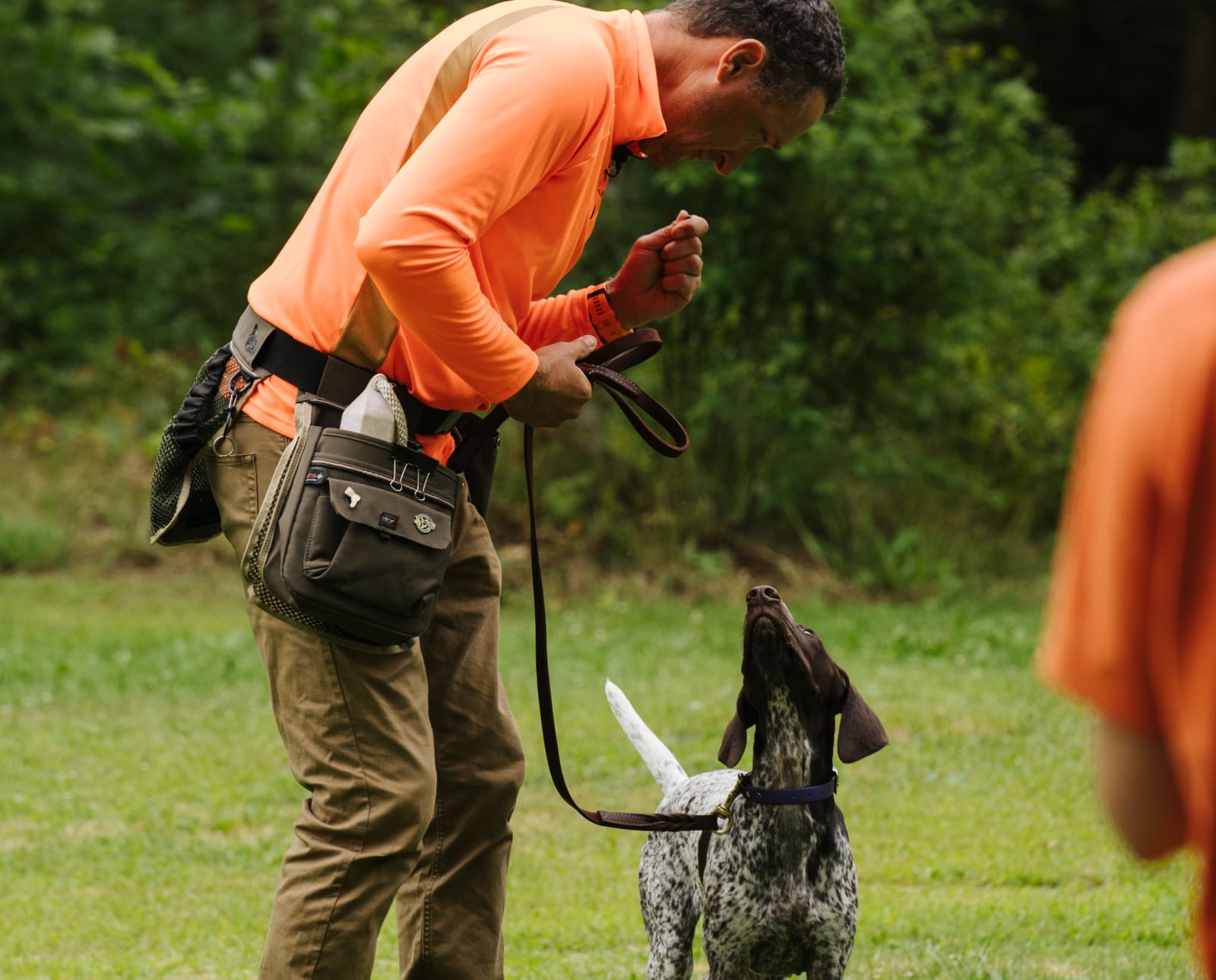
While many dog owners seek effective training techniques, the usage of benefits and deals with as favorable support techniques has actually confirmed to be one of the most successful approaches. By offering deals with, appreciation, or various other benefits, owners can urge preferred habits in their canine friends. This technique profits from the dog's all-natural instinct to seek satisfaction and authorization. Timing is vital; rewards need to be given immediately after the desired actions to create a clear organization. Range in deals with can also maintain a pet's rate of interest and inspiration throughout training sessions. Additionally, using benefits fosters a favorable bond in between the dog and proprietor, making finding out delightful. Overall, integrating incentives and treats efficiently can result in a delighted and mannerly dog.
Clicker Training Conveniences
Uniformity Is Trick
Uniformity plays an important role in the effectiveness of positive support strategies in dog training. When handlers apply rewards, such as deals with or praise, reliably after desired habits, pet dogs swiftly find out to link these actions with favorable outcomes. This organization enhances their inspiration to duplicate those habits. Irregular support, on the other hand, can puzzle canines, leading to unpredictability about what actions generate benefits. To establish clear communication, instructors should utilize the same commands and signs continually. Furthermore, strengthening habits promptly after they happen boosts understanding and retention. With time, this foreseeable pattern promotes trust fund and a stronger bond in between the dog and fitness instructor, eventually resulting in a well-behaved canine buddy. Uniformity is, hence, essential to effective dog training.
Uniformity Is Key
When educating a pet dog, preserving a regular strategy is crucial for achieving reliable results. Pets grow on routine and clearness, which aids them understand expectations and desired habits. A fitness instructor has to stick and develop clear commands to them, making certain that every family members participant makes use of the same terms and signals. In addition, benefits and corrections need to be applied consistently; incongruities can puzzle the dog, bring about irritation for both the pet dog and the proprietor. By establishing a predictable training routine and adhering to it, progression can be gauged a lot more properly. Inevitably, consistency promotes count on and enhances the bond in between the dog and fitness instructor, producing a solid foundation for a well-behaved canine friend.
Taking Care Of Usual Behavioral Issues
How can dog owners efficiently address typical behavior concerns that emerge during training? Recognizing the origin of actions such as barking, chewing, or jumping is necessary. Proprietors ought to observe their dog's triggers and contexts to much better recognize these actions. Suitable and consistent support strategies, such as favorable support, can help redirect unwanted actions. Furthermore, setting clear limits and making use of commands consistently cultivates understanding. For instance, when a dog barks exceedingly, owners can educate them to respond to a "quiet" command. Persistence is crucial; behavioral adjustment requires time. When issues continue, seeking professional aid from a fitness instructor may also be valuable. Inevitably, attending to behavioral concerns early can bring about a much more harmonious partnership between dog and owner.
Building a Solid Bond With Training

Training might commonly be checked out as a method to fix habits, it additionally serves as a powerful my response opportunity for dog owners to develop a much deeper link with their animals. Engaging in regular training sessions fosters count on and interaction between the dog and owner. As pets find out new commands and skills, they obtain confidence, while owners discover to recognize their pet dog's one-of-a-kind individuality and demands. Favorable support techniques, such as deals with and praise, enhance this bond, urging canines to link training with satisfying experiences. With routine communication during training, both proprietor and dog create a mutual respect and understanding, reinforcing their partnership. Ultimately, this solid bond not only leads to a well-behaved canine companion yet also enhances the total friendship shared.
Often Asked Questions
How Lengthy Does It Require To Train a Pet Effectively?
Training a canine efficiently generally takes numerous weeks to months, relying on the dog's age, breed, and the intricacy of the preferred actions. Uniformity, perseverance, and positive support play important functions in the training process.
Can I Train an Older Dog or Simply Puppies?
Yes, older canines can be trained just as efficiently as pups. While they might call for various approaches and patience, with regular practice and Continued favorable reinforcement, older canines can find out new habits and commands.
What Should I Do if My Dog Refuses to Respond?
If a pet refuses to respond, the proprietor should analyze the atmosphere for interruptions, make use of positive reinforcement, warranty consistent commands, and think about the dog's health and training background, seeking specialist assistance if essential.
Are There Specific Breeds That Are Easier to Train?
Specific breeds, such as Border Collies, Poodles, and Labrador Retrievers, are frequently considered easier to educate because of their knowledge and readiness to please. Constant techniques and positive reinforcement boost training success across all types.
Exactly how Do I Select the Right Training Devices and Equipment?
Picking the best training devices and devices entails assessing the dog's size, personality, and training objectives. Looking into various alternatives, looking for referrals, and thinking about the dog's comfort and safety are necessary actions in making an informed decision.
Socialization offers as a keystone of reliable dog training, influencing a dog's behavior and adaptability in numerous settings. Clearness in interaction boosts the performance of dog training, and clicker training exhibits this principle via its organized technique. Training may usually be viewed as a means to deal with behavior, it likewise serves as an effective possibility for dog proprietors to develop a deeper connection with their pet dogs. Training a pet effectively commonly takes a number of weeks to months, depending on the dog's age, type, and the you could try these out intricacy of the wanted actions. Selecting the best training tools and equipment involves reviewing the dog's size, training, and personality goals.